 EN
EN

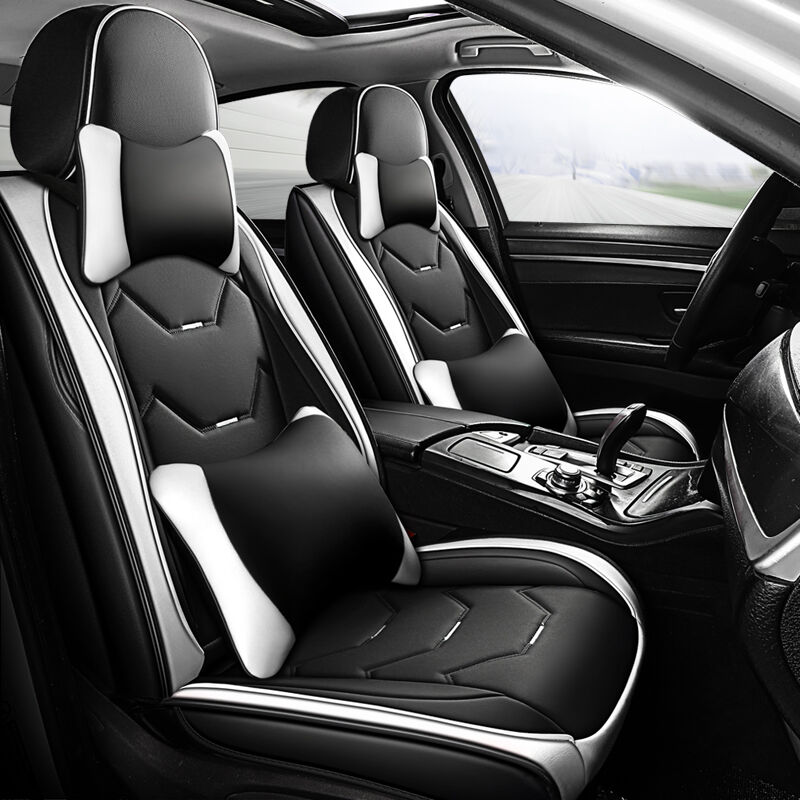
When buyers invest in universal leather seat covers, they expect more than just an attractive appearance. They expect a product that holds up through daily use, shifting seasons, UV exposure, moisture, and the general wear and tear that comes with regular vehicle use. To meet these expectations, responsible manufacturers put universal leather seat covers through a rigorous series of standardized and real-world tests before products ever reach the consumer. Understanding what these tests involve helps buyers, fleet managers, and automotive accessory distributors make smarter sourcing decisions.
Durability in universal leather seat covers is not accidental. It is engineered and verified through a combination of material-level testing, functional stress evaluations, and environmental simulation protocols. Each test is designed to replicate real-world stresses, so that what reaches the market is a product that can genuinely deliver on its promises. This article breaks down the key categories of testing that separate long-lasting seat covers from those that deteriorate within months.
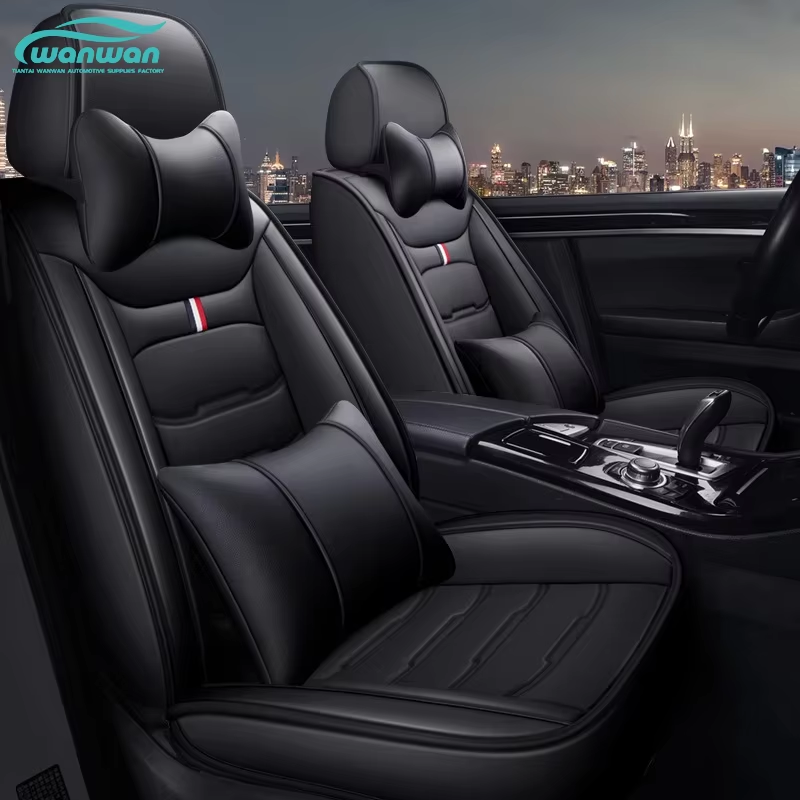
Material Quality Testing at the Foundation
Leather Substrate and Coating Analysis
The durability of universal leather seat covers begins with the raw material itself. Before any cover is cut and sewn, the leather substrate — whether genuine leather, PU leather, or bonded leather — must pass elemental material tests. These include tensile strength tests that measure how much force the material can withstand before tearing, and elongation tests that evaluate how far it stretches without permanent deformation.
Surface coating adhesion is also a critical test at this stage. The coating on universal leather seat covers is responsible for resistance to cracking, peeling, and staining. A peel adhesion test, often conducted using a standardized cross-cut or tape-pull method, confirms whether the surface coating bonds reliably to the base material across temperature changes. Coatings that fail this test will crack prematurely in cold weather or peel under summer heat.
Thickness uniformity is measured to ensure consistent quality across the entire sheet of material. Inconsistent material thickness directly leads to uneven wear, which causes some areas of the seat cover to degrade faster than others. Professional-grade testing equipment measures thickness at multiple sampling points across the material roll.
Stitching and Seam Integrity Testing
The seams of universal leather seat covers are structural points that experience continuous stress every time someone enters or exits the vehicle. Seam strength is tested by applying a measured pulling force to both sides of a stitched joint until failure or deformation occurs. High-quality seat covers must achieve a seam break force that meets or exceeds automotive interior standards.
Thread quality also plays a role in seam longevity. Polyester threads are typically preferred over cotton threads in universal leather seat covers because they resist UV degradation and moisture absorption more effectively. Thread tensile strength and UV resistance are often tested independently before assembly begins. This ensures that even if the leather itself holds up, the stitching does not become the weak link over time.
For double-stitched or reinforced seam designs, additional burst pressure tests may be applied. These simulate the force of a larger occupant sitting down aggressively, which places extreme lateral stress on the seam lines at the side bolsters and back panel joints.
Abrasion and Wear Resistance Testing
Martindale and Taber Abrasion Methods
Abrasion resistance is one of the most critical durability indicators for universal leather seat covers. The Martindale abrasion test is widely used in the textile and automotive seating industry. In this test, a fabric or leather sample is rubbed in a figure-eight pattern against a standard abrasive cloth under controlled pressure. The number of rub cycles a sample survives before visible surface damage defines its abrasion rating.
High-performance universal leather seat covers typically need to achieve ratings of 50,000 cycles or higher on the Martindale scale to be considered suitable for automotive use. Products that fail below 20,000 cycles will show visible surface wear within a year of normal use. This test directly correlates with the lifespan a buyer can expect from a seat cover in regular daily driving conditions.
The Taber abrasion method is an alternative approach that uses rotating abrasive wheels under a set load. While it simulates slightly different wear patterns compared to Martindale, Taber tests are particularly useful for evaluating how the cover performs against harder contact objects such as zippers, metal buckles, and pet claws — factors that real-world users regularly expose their universal leather seat covers to.
Scratch and Scuff Testing
Surface scratch resistance is evaluated separately from general abrasion. A scratch testing instrument draws a sharp-tipped stylus across the material surface under progressively increasing loads. The point at which a visible scratch forms determines the scratch resistance threshold of the leather surface coating.
For universal leather seat covers intended for high-traffic vehicles or commercial use — such as taxis, rideshare cars, or family vehicles with children — scratch resistance becomes especially important. The coating must resist light scratches from keys, toys, and bags without showing permanent marks. This test ensures the cosmetic appearance of the cover is maintained over extended periods of demanding use.
Environmental and Climate Resistance Testing
UV Exposure and Fade Resistance
Sunlight is one of the most destructive forces acting on universal leather seat covers. UV radiation breaks down surface coatings and colorants over time, causing fading, chalking, and brittleness. UV fade resistance testing involves exposing material samples to concentrated UV light sources — typically xenon arc lamps — for a defined number of hours equivalent to months or years of outdoor sun exposure.
After UV exposure, the samples are evaluated against a grey scale rating from 1 to 5, where 5 represents no visible color change. Premium universal leather seat covers should achieve a minimum grey scale rating of 4 after exposure equivalent to approximately 300 hours in a xenon weatherometer. Products that fade quickly not only look unattractive but also signal that the surface coating is degrading, which will accelerate cracking and peeling.
Lightfastness testing is a related evaluation that focuses specifically on colorant stability rather than the structural integrity of the coating. For universal leather seat covers offered in dark tones such as black, charcoal, or navy, maintaining consistent color depth across the product's lifespan is a key commercial quality indicator that buyers expect.
Temperature Cycling and Humidity Testing
Vehicles parked outdoors experience dramatic temperature swings — from freezing winter mornings to blistering summer afternoons. Universal leather seat covers must withstand these cycles without cracking, delaminating, or losing flexibility. Thermal cycling tests expose material samples to alternating high and low temperatures — typically ranging from -20°C to +80°C — for multiple cycles. After completion, the material is inspected for cracks, surface separation, and hardening.
Humidity resistance testing is equally important in regions with high rainfall or coastal environments. Moisture can infiltrate seams and cause mold, delamination, or staining if the materials are not properly treated. universal leather seat covers designed for four-season use must pass humidity chamber tests that simulate extended exposure to high relative humidity levels — often above 90% — without showing signs of structural degradation.
Cold flexibility testing specifically evaluates whether the cover remains pliable at low temperatures. Materials that become rigid and crack in cold conditions create safety hazards and user dissatisfaction. Bending and folding the cooled material around a mandrel of a defined diameter confirms whether it retains sufficient flexibility for practical installation in winter conditions.
Functional Fit and Installation Stress Testing
Universal Fitment Validation Across Vehicle Types
One of the unique challenges facing universal leather seat covers is that they must accommodate a wide range of vehicle seat geometries. Unlike custom-fit covers, universal designs rely on elastic edges, hook-and-loop fasteners, and adjustable straps to conform to different seat shapes. Testing the fitment system involves physically installing the cover on multiple vehicle seat configurations — standard, sport bucket, high-back, and bench seats — and evaluating coverage consistency and fastener security.
Fastener tension testing measures how much force is required to remove the installed cover from the seat. The cover should remain securely in place during normal occupant movement but be removable for cleaning without damaging the attachment hardware. For universal leather seat covers that advertise wash-free or easy-care features, the installation system must maintain its integrity through repeated installation and removal cycles without stretching out or losing grip strength.
Simulated occupant load testing places standardized weight forms onto the installed cover and evaluates whether the cover shifts, buckles, or bunches under load. Covers that migrate out of position create discomfort and present a distraction risk. The ability to maintain a clean, taut surface appearance after repeated sitting and exiting motions is a measurable performance benchmark in fitment testing.
Cleaning Durability and Wash Resistance
For universal leather seat covers positioned as easy-care or wash-free products, resistance to cleaning agents and wiping actions must be quantified. Surface cleaning durability tests apply standardized cleaning solutions at defined concentrations to the cover surface and evaluate any change in appearance — including color transfer, surface dulling, or coating removal — after a set number of wiping cycles.
Stain resistance testing applies common vehicle-environment contaminants such as oil, coffee, and ink to the surface. The ability of the surface to resist immediate absorption and be cleaned without permanent marking is evaluated under controlled conditions. Products designed for family vehicles or commercial transport must excel in this category to justify their positioning as practical, long-life seat covers.
For covers that can be spot-washed or removed and machine-washed, dimensional stability after washing is also tested. The cover should return to its original dimensions after washing and drying, without shrinkage, warping, or distortion that would prevent proper reinstallation. This cycle is often repeated multiple times to simulate cumulative washing effects over the product's intended service life.
FAQ
What is the most important durability test for universal leather seat covers?
Abrasion resistance testing is widely considered the most critical durability test for universal leather seat covers because it directly predicts how well the surface will hold up to daily contact, sliding, and friction. Martindale or Taber abrasion ratings give buyers a concrete benchmark for expected lifespan under normal use conditions.
How does UV testing apply to universal leather seat covers used in hot climates?
In hot, sunny climates, UV exposure testing is especially relevant for universal leather seat covers because dashboard heat and direct sunlight accelerate surface degradation. Products tested to a grey scale rating of 4 or higher after 300+ hours of xenon arc exposure are significantly more likely to maintain their color and surface integrity over multiple years of use in high-UV environments.
Why does temperature cycling testing matter for year-round use?
Temperature cycling tests ensure that universal leather seat covers remain flexible and intact across seasonal temperature extremes. A cover that cracks in winter or deforms in summer heat not only looks poor but may also compromise the structural integrity of the seat accessory, causing it to fail earlier than expected. This testing is especially relevant for four-season products designed for use in variable climates.
How does fitment testing affect the durability of universal leather seat covers?
Fitment testing ensures that universal leather seat covers stay securely positioned during use, which is essential for both durability and safety. A cover that shifts or bunches will experience uneven wear patterns, leading to premature failure at stress points. Validated fitment across multiple vehicle types also confirms that the elastic and fastening systems maintain their function through repeated installation cycles.
Table of Contents
- Material Quality Testing at the Foundation
- Abrasion and Wear Resistance Testing
- Environmental and Climate Resistance Testing
- Functional Fit and Installation Stress Testing
-
FAQ
- What is the most important durability test for universal leather seat covers?
- How does UV testing apply to universal leather seat covers used in hot climates?
- Why does temperature cycling testing matter for year-round use?
- How does fitment testing affect the durability of universal leather seat covers?