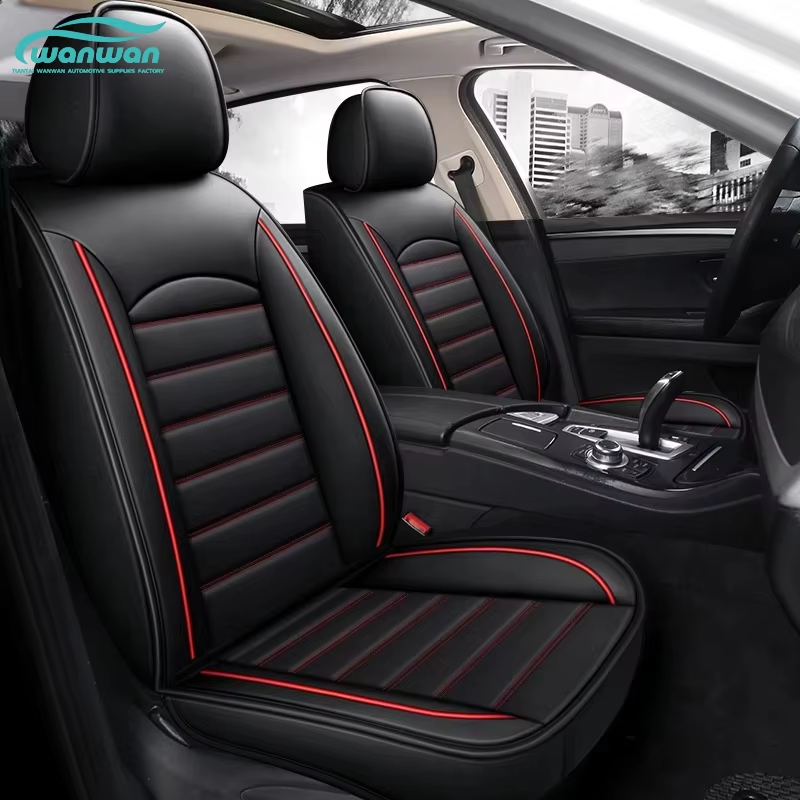
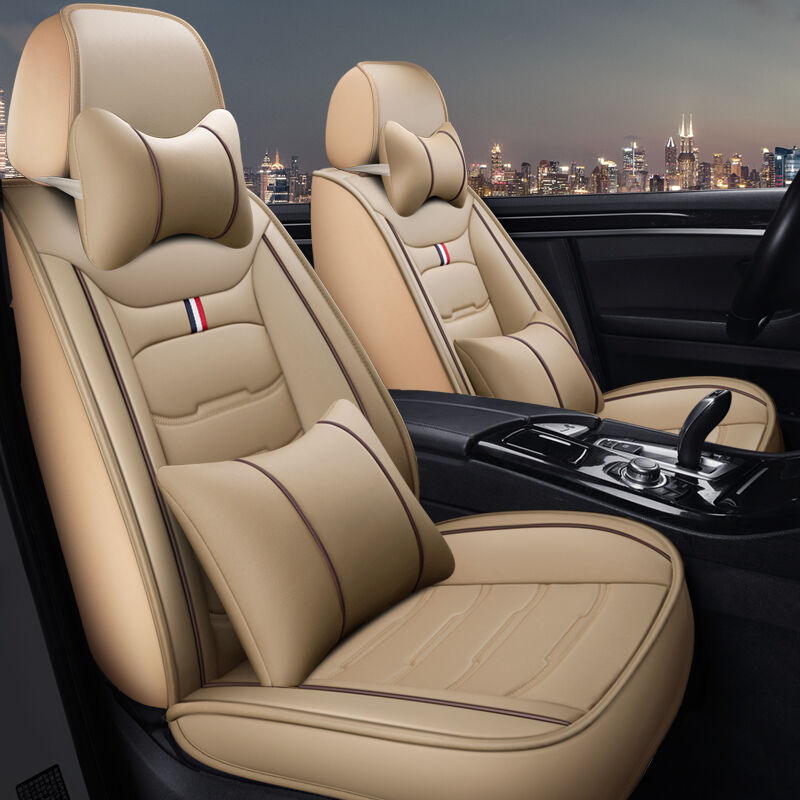
The global automotive accessories market has been experiencing a significant shift in buying behavior, and one category standing out consistently is covers for car seats. Across export-oriented markets, wholesalers, distributors, and cross-border e-commerce sellers are reporting a steady surge in demand for seat cover products that combine durability, aesthetics, and universal fitment. Understanding why this demand spike is happening requires looking beyond surface-level trends and into the structural drivers shaping both supply chains and consumer expectations worldwide.
When sourcing teams evaluate products for export, durability is no longer a secondary consideration — it is the primary purchase driver. covers for car seats that are engineered with premium materials, reinforced stitching, and all-season adaptability are capturing the attention of international buyers who need products that perform reliably across diverse climates and vehicle types. This article explores the key reasons behind the rising export demand for durable seat cover solutions and what that means for businesses operating in this space.

The Export Market Opportunity Behind Durable Seat Covers
Rising Vehicle Ownership Across Emerging Markets
Vehicle ownership rates have been climbing steadily across Southeast Asia, the Middle East, Africa, and Latin America. As more households acquire personal vehicles, the demand for protective and decorative automotive accessories grows in parallel. Covers for car seats represent one of the first purchases a new vehicle owner makes, both to preserve resale value and to personalize the interior experience.
For exporters, this creates a repeatable demand cycle. Unlike one-time mechanical parts, seat covers are replaced with relative frequency due to wear, style updates, or damage. This consumable-like nature of the product makes it an attractive category for cross-border trade businesses seeking predictable reorder volumes and strong long-term customer relationships.
Markets where vehicle fleets are expanding — including ride-hailing services, commercial logistics, and private hire transport — further amplify the need for durable covers for car seats that can withstand heavy daily usage. A single fleet operator may require hundreds of units per order, making this segment particularly valuable for export-focused suppliers.
Cross-Border E-Commerce Fueling Volume Growth
The rise of cross-border e-commerce platforms has made it easier than ever for international buyers to source covers for car seats directly from manufacturers and wholesalers. Platforms serving markets in Europe, North America, and the Gulf region have seen automotive accessories become one of their fastest-growing product categories, and seat covers consistently rank among the highest-selling items within that group.
This channel shift has removed many of the traditional barriers to entry for smaller importers. A distributor in Eastern Europe or a specialty auto accessories retailer in Australia can now access factory-direct pricing on durable seat cover products with minimal friction. For exporters, this means the addressable market for covers for car seats has expanded dramatically, and the buyers entering it expect product quality that matches the professional standards of their local retail environment.
Why Durability Is the Central Value Proposition for Export
Climate and Usage Variability Across Export Destinations
One of the most compelling reasons durable covers for car seats are commanding such strong demand in export markets is the sheer variability of conditions across destination regions. A product sold in a Gulf state must withstand extreme heat and direct sun exposure. The same product line exported to Scandinavia or Canada must resist cold temperatures, moisture, and salt residue tracked in from winter roads.
Products engineered for all-season performance — using materials such as high-grade synthetic leather, breathable mesh layers, and heat-resistant foam padding — naturally command higher trust from international buyers. When covers for car seats can credibly perform across a wide temperature and humidity range, they reduce the risk of warranty complaints, returns, and negative reviews that can damage a seller's standing on competitive online platforms.
Durability in this context is not just about the material tensile strength. It encompasses colorfastness under UV exposure, resistance to cracking in cold environments, and the ability to maintain structural integrity after repeated removal and reattachment cycles. Buyers sourcing covers for car seats for export specifically ask about these properties because their end customers depend on them.
Universal Fitment as a Durability-Adjacent Demand Driver
Export buyers consistently prioritize products with universal compatibility because it simplifies inventory management and broadens the pool of end customers they can serve. Covers for car seats that are designed to fit a wide range of vehicle models — sedans, SUVs, crossovers, and light commercial vehicles — reduce the risk of dead stock and allow a single SKU to address multiple market segments simultaneously.
The engineering challenge behind universal fitment is considerable. A seat cover must maintain a clean, professional appearance on a compact city car while also fitting securely on a full-size SUV without bunching, slipping, or interfering with seatbelt access or airbag deployment zones. Products that solve this challenge convincingly are viewed as higher value, and buyers are willing to pay a premium for them.
For exporters, universal fitment also means fewer product variations to manage per market. Rather than maintaining region-specific SKUs, a well-designed covers for car seats range can serve multiple countries from a single catalog, reducing production complexity and improving supply chain efficiency.
Material Innovation Driving International Buyer Preference
Premium Leather and Synthetic Material Demand
International buyers sourcing covers for car seats for retail or wholesale distribution increasingly demand products that replicate the aesthetic quality of OEM vehicle interiors. High-grade synthetic leather has emerged as the dominant material of choice in export markets because it strikes the right balance between visual appeal, tactile comfort, cost-effectiveness, and maintenance simplicity.
Synthetic leather used in premium covers for car seats is engineered to resist abrasion, repel liquids, and maintain its surface texture through thousands of use cycles. Unlike genuine leather, it does not require conditioning treatments, is not subject to the same degree of temperature-related expansion and contraction, and can be produced in a consistent color range without natural variation concerns.
These practical advantages translate directly into lower after-sale complaints from end consumers, which is a critical consideration for any exporter or retailer managing their reputation across competitive digital marketplaces. When covers for car seats consistently meet or exceed material quality expectations, customer satisfaction scores improve and repeat purchase rates follow.
All-Season Design as a Market Differentiator
The concept of an all-season seat cover — one product that serves the vehicle owner comfortably in both summer heat and winter cold — has become a powerful differentiator in export markets. Buyers who previously stocked separate summer and winter seat cover lines are consolidating their purchasing around products that eliminate the seasonal swap and the doubled inventory burden.
All-season covers for car seats typically incorporate layered construction: a breathable outer surface that prevents heat buildup in warm weather, a mid-layer with thermal retention properties for cold conditions, and a non-slip base that keeps the cover secure regardless of temperature-related material contraction or expansion. Products delivering this level of engineering are positioned at the premium tier of the export market and attract buyers looking for differentiated offerings.
For exporters, the ability to market a single line of covers for car seats as genuinely all-season capable opens doors to multi-climate markets that would otherwise require separate product development investments. This efficiency in product positioning is a key reason all-season durable seat covers have become a flagship category in cross-border automotive accessories trade.
Buying Behavior and Decision Factors Among International Importers
Quality Certifications and Compliance Requirements
As export markets mature, buyers are placing increasing emphasis on product certifications and compliance documentation. Covers for car seats destined for European markets must demonstrate compliance with relevant textile safety standards. Products entering Gulf Cooperation Council markets increasingly require local certification approvals. Buyers in North American markets ask about flammability resistance standards and material safety data for chemical composition.
Exporters who proactively maintain compliance documentation for their covers for car seats are positioned to close deals faster and at higher margins. Buyers who encounter certification-ready suppliers reduce their own risk exposure and administrative burden, which makes them more likely to consolidate purchasing volume with those suppliers over time.
This dynamic is creating a quality stratification in the export market for covers for car seats. Suppliers who invest in certifications, material testing reports, and transparent quality assurance processes are pulling ahead of lower-cost competitors who cannot meet the documentation requirements of regulated import markets.
Packaging, Branding, and Private Label Demand
International buyers purchasing covers for car seats for retail resale place significant weight on packaging presentation and private label flexibility. A seat cover that arrives in professional, retail-ready packaging with multilingual care instructions signals product maturity and reduces the buyer's own packaging investment requirement.
Private label capability — the ability for a buyer to source covers for car seats under their own brand identity — is a particularly strong demand driver among established retailers and e-commerce operators who want to build brand equity rather than simply resell generic products. Exporters who can accommodate custom labeling, box design, and SKU-level customization are capturing disproportionate share of the premium importer segment.
The willingness of a supplier to support private label development at reasonable minimum order quantities signals operational sophistication and supply chain stability. For buyers evaluating covers for car seats sourcing partners, this capability often tips the decision in favor of one supplier over another when product quality is otherwise comparable.
Logistics and Supply Chain Considerations for Seat Cover Exports
Product Density and Shipping Efficiency
From a logistics standpoint, covers for car seats offer an attractive export profile. They are lightweight relative to their retail value, compress efficiently for container packing, and do not require the specialized handling associated with fragile or hazardous automotive components. This favorable shipping density translates into lower per-unit freight costs, which in turn supports competitive landed cost pricing for international buyers.
Exporters who understand how to optimize carton dimensions and compression packaging for seat cover products can materially improve the economics of each shipment. When covers for car seats are packed to maximize container utilization, the freight cost per unit decreases and the overall margin profile of the export transaction improves for both the supplier and the buyer.
Lead Time Reliability and Inventory Planning
International buyers managing retail or distribution businesses require predictable lead times to maintain their own inventory commitments. For covers for car seats, which are often ordered in large volumes ahead of seasonal peaks or new product launches, supplier lead time reliability is a critical selection criterion.
Exporters who maintain pre-positioned inventory of core SKUs, or who operate production facilities with sufficient capacity to handle surge orders, are able to offer lead time commitments that smaller or less-organized suppliers cannot match. This operational advantage compounds over time as buyers become increasingly dependent on suppliers who consistently deliver covers for car seats on schedule and to specification.
FAQ
What makes covers for car seats particularly suitable for cross-border export trade?
Covers for car seats combine a high-value-to-weight ratio, broad universal appeal across vehicle categories, and strong repeat purchase frequency — all characteristics that make them highly efficient to export. Their applicability across diverse markets, from fleet operators to individual consumers, ensures sustained demand without heavy reliance on any single buyer segment.
How important is material quality when sourcing covers for car seats for international markets?
Material quality is arguably the most critical factor. International buyers face diverse climate conditions, regulatory requirements, and consumer expectations. Covers for car seats made with durable, UV-resistant, and all-season capable materials reduce return rates, generate positive reviews, and support long-term buyer-supplier relationships more effectively than lower-cost alternatives with shorter functional lifespans.
Do international buyers typically require certifications for covers for car seats?
Yes, and this requirement is becoming more widespread as regulated markets tighten import standards. European, North American, and Gulf markets each have specific compliance frameworks that may apply to covers for car seats, covering areas such as textile safety, chemical content, and flammability resistance. Suppliers who proactively maintain compliance documentation gain a meaningful competitive advantage in these markets.
What role does universal fitment play in the export demand for covers for car seats?
Universal fitment significantly expands the addressable customer base for any given seat cover product. For export buyers managing inventory across multiple vehicle-type markets, covers for car seats with proven universal compatibility reduce SKU complexity, lower the risk of unsellable stock, and allow a single product to serve a much wider range of end customers than vehicle-specific designs could achieve.
Table of Contents
- The Export Market Opportunity Behind Durable Seat Covers
- Why Durability Is the Central Value Proposition for Export
- Material Innovation Driving International Buyer Preference
- Buying Behavior and Decision Factors Among International Importers
- Logistics and Supply Chain Considerations for Seat Cover Exports
-
FAQ
- What makes covers for car seats particularly suitable for cross-border export trade?
- How important is material quality when sourcing covers for car seats for international markets?
- Do international buyers typically require certifications for covers for car seats?
- What role does universal fitment play in the export demand for covers for car seats?